
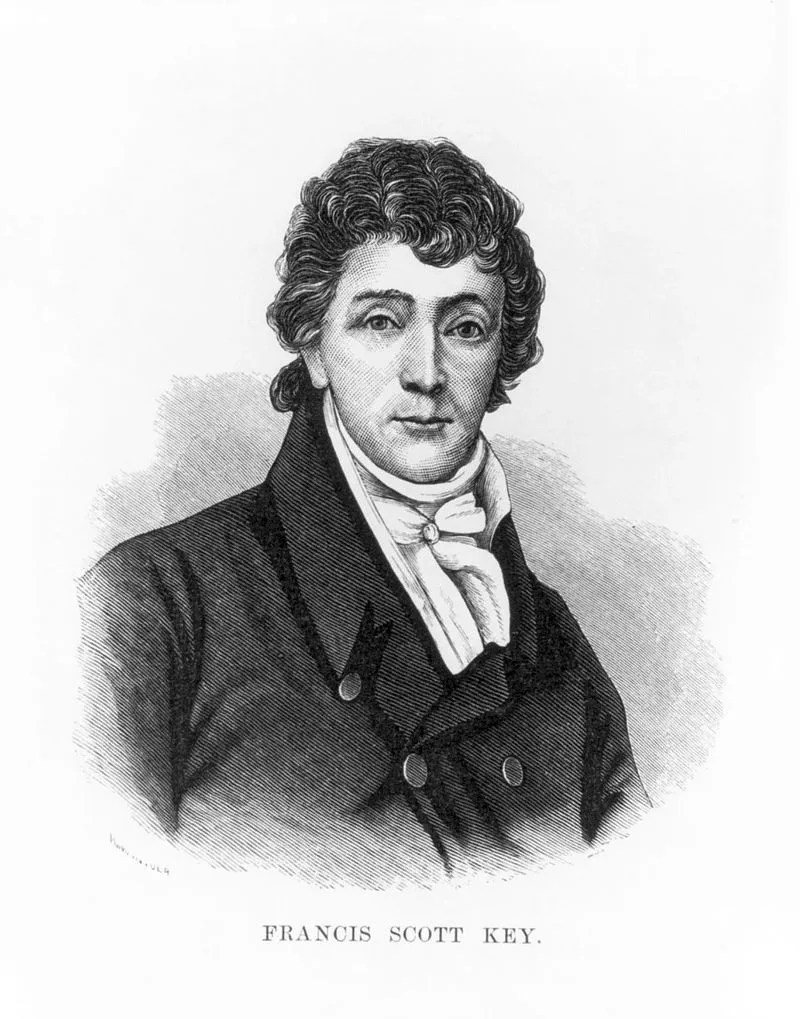
Francis Scott Key è una figura di grande importanza storica negli Stati Uniti, principalmente noto per aver scritto il testo dell’inno nazionale, “The Star-Spangled Banner”. Al di là delle parole immortali che riecheggiano in eventi e raduni in tutta la nazione, la vita di Key è un intrecciarsi di servizio pubblico, competenza legale e una posizione complessa sulle questioni cruciali del suo tempo.
Nato il 1 agosto 1779, nell’attuale contea di Carroll nel Maryland, Key era radicato nel tessuto legale e sociale della prima America. La sua famiglia era ben stabilita, con suo padre che svolgeva la professione di avvocato, ufficiale nell’Esercito Continentale e giudice. Key si formò al St. John’s College di Annapolis, nel Maryland, e successivamente studiò legge sotto la guida dello zio Philip Barton Key.
Durante la sua carriera, Key fu in prima linea in eventi legali di rilievo storico. Partecipò al sensazionale processo di Aaron Burr e all’affare Petticoat riguardante il Segretario alla Guerra John Eaton. Difese anche Sam Houston in un caso di aggressione e servì come procuratore chiave in processi di alto profilo. Più tardi nella vita, il presidente Andrew Jackson lo nominò procuratore distrettuale per il Distretto di Columbia, un incarico che mantenne per otto anni.
La composizione di “The Star-Spangled Banner” nacque dal contesto tumultuoso della guerra del 1812. Dopo l’attacco britannico a Washington, Key si trovò a bordo di una nave britannica, negoziando il rilascio di un americano detenuto. Mentre Fort McHenry subiva un intenso bombardamento, la vista della bandiera americana che ancora sventolava all’alba ispirò Key a scrivere le prime linee della poesia sul retro di una lettera che aveva in tasca. Il testo completato fu poi musicato con una canzone popolare del tempo e divenne un amato inno patriottico, ufficialmente adottato nel 1931.
Il Francis Scott Key Bridge di Baltimora, una significativa opera infrastrutturale intitolata in suo onore, è un tributo alla sua eredità duratura. Il ponte attraversava il fiume Patapsco e serviva come arteria vitale, collegando varie parti della città e facilitando la vita di molti pendolari dalla sua apertura nel 1977. In una giornata limpida, dalle altezze del ponte, si poteva osservare il forte di cui Key aveva scritto, collegando passato e presente in un’unica panoramica.
La vita e le opere di Francis Scott Key rimangono intrecciate nell’identità americana. Le sue parole, rappresentative dello spirito della nazione, e il ponte che portava il suo nome, un emblema della crescita e della connettività del paese, riflettono le complessità e i trionfi di una nazione che si sforza sempre verso i suoi ideali.
====================================
Francis Scott Key stands as a figure of significant historical importance in the United States, known chiefly for penning the lyrics to the country’s national anthem, “The Star-Spangled Banner”. But beyond the enduring words that resonate at events and gatherings across the nation, Key’s life is a tapestry of public service, legal prowess, and a complex stance on the pressing issues of his time.
Born on August 1, 1779, in what is now Carroll County, Maryland, Key was embedded in the legal and social fabric of early America. His family was well-established, with his father serving as a lawyer, officer in the Continental Army, and a judge. Key himself was educated at St. John’s College in Annapolis, Maryland, and went on to read law under his uncle, Philip Barton Key.
Throughout his career, Key was at the legal forefront of notable historical events. He was involved in the sensational trial of Aaron Burr and the Petticoat affair concerning Secretary of War John Eaton. He even defended Sam Houston in an assault case and served as a key prosecutor in high-profile trials. Later in life, President Andrew Jackson nominated him to be the District Attorney for the District of Columbia, a position he held for eight years.
Key’s composition of “The Star-Spangled Banner” arose from the tumultuous backdrop of the War of 1812. Following the British attack on Washington, D.C., Key found himself aboard a British ship, negotiating the release of a detained American. As Fort McHenry endured a fierce bombardment, the sight of the American flag still flying at dawn inspired Key to write the initial lines of the poem on the back of a letter he had in his pocket. The completed verse was later set to the tune of a popular song of the time and went on to become a beloved patriotic anthem, officially adopted in 1931.
The Francis Scott Key Bridge in Baltimore, a significant piece of infrastructure named in his honor, is a tribute to his enduring legacy. The bridge spanned the Patapsco River and served as a vital thoroughfare, connecting various parts of the city and easing the lives of many commuters since its opening in 1977. On a clear day, from the heights of the bridge, one could gaze upon the very fort Key wrote about, connecting the past and the present in a single panoramic vista.
Francis Scott Key’s life and works remain woven into the fabric of American identity. His words, representative of the nation’s spirit, and the bridge that bore his name, an emblem of the nation’s growth and connectivity, reflect the complexities and triumphs of a country forever striving towards its ideals.
Leggi anche:

 alessandriaonline.com